

Module 2: Collect
Toitū te marae a Tāne-Mahuta, Toitū te marae a Tangaroa, Toitū te tangata – if the land is well and the sea is well, the people will thrive.
Wai is constantly moving, changing forms and taking different journeys. But what are the many journeys of wai?
In this module, you’ll be introduced to Ranginui and Papatūānuku, the Sky Father and Earth mother, and their part in Te Hurihanga Wai (the water cycle). Then, you’ll collect wai for your network!
The water cycle | Te Hurihanga Wai
Wai on Earth is finite. So, if all life depends on wai, how come it doesn’t run out?
The answer to that pātai is the water cycle. And, it all began with Ranginui and Papatūānuku.
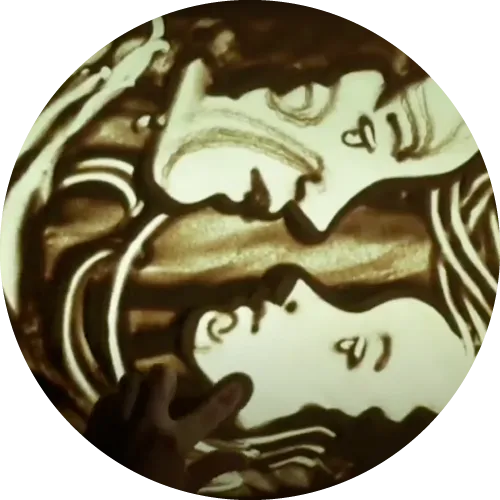
To this day, Ranginui and Papatūānuku still yearn to be together. The teardrops of Ranginui (rain), the sighs of Papatūānuku (mist), and their children, help them stay connected.
The natural water cycle
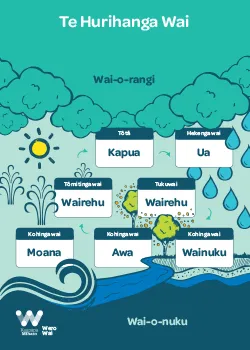
You can see the eternal dance between Ranginui, Papatūānuku and their children in the natural water cycle. The water cycle helps to recycle wai, so it doesn’t run out.
Earth has been recycling wai for over 4 billion years! In fact, the water from your tap is the same as the water that the first ever humans drank.
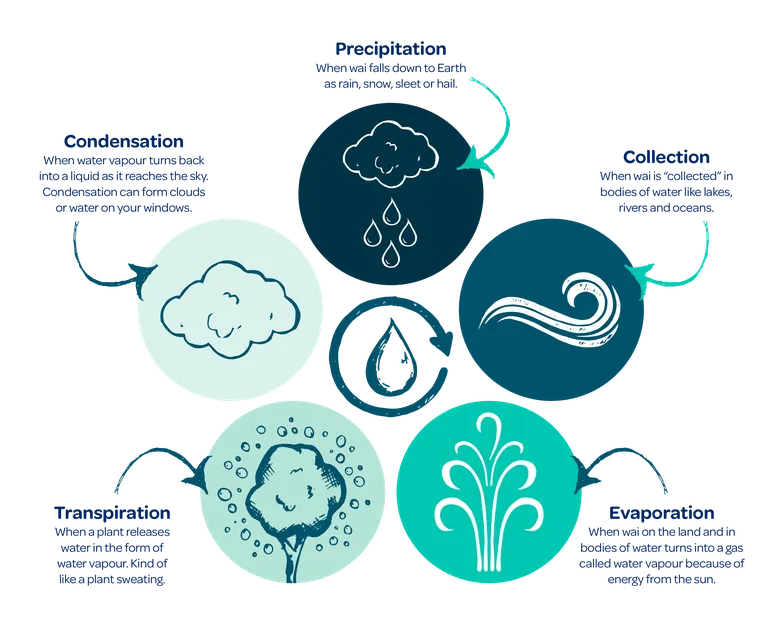
Through processes like evaporation and transpiration, the tears of Ranginui are returned to him after they’ve nourished Papatūānuku. Then, the cycle continues.
Poster: Te Hurihanga Wai
Print and display this poster on Te Hurihanga Wai in English – the eternal dance between Ranginui, Papatūānuku that helps recycle wai.
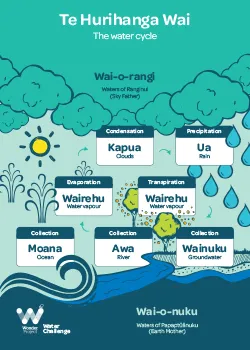
Poster: Te hurihanga wai
Print and display this poster on Te Hurihanga Wai in te reo Māori – the eternal dance between Ranginui, Papatūānuku that helps recycle wai.
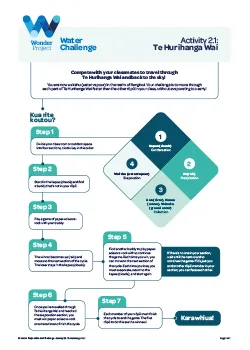
Activity 2.1: Te Hurihanga Wai
Compete with your classmates to travel through Te Hurihanga Wai and back to the sky!
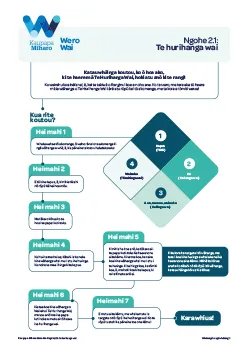
Ngohe 2.1: Te hurihanga wai
Ka tauwhāinga koutou, ko ō hoa ako, ki te haere mā Te Hurihanga Wai, hoki atu anō ki te rangi!
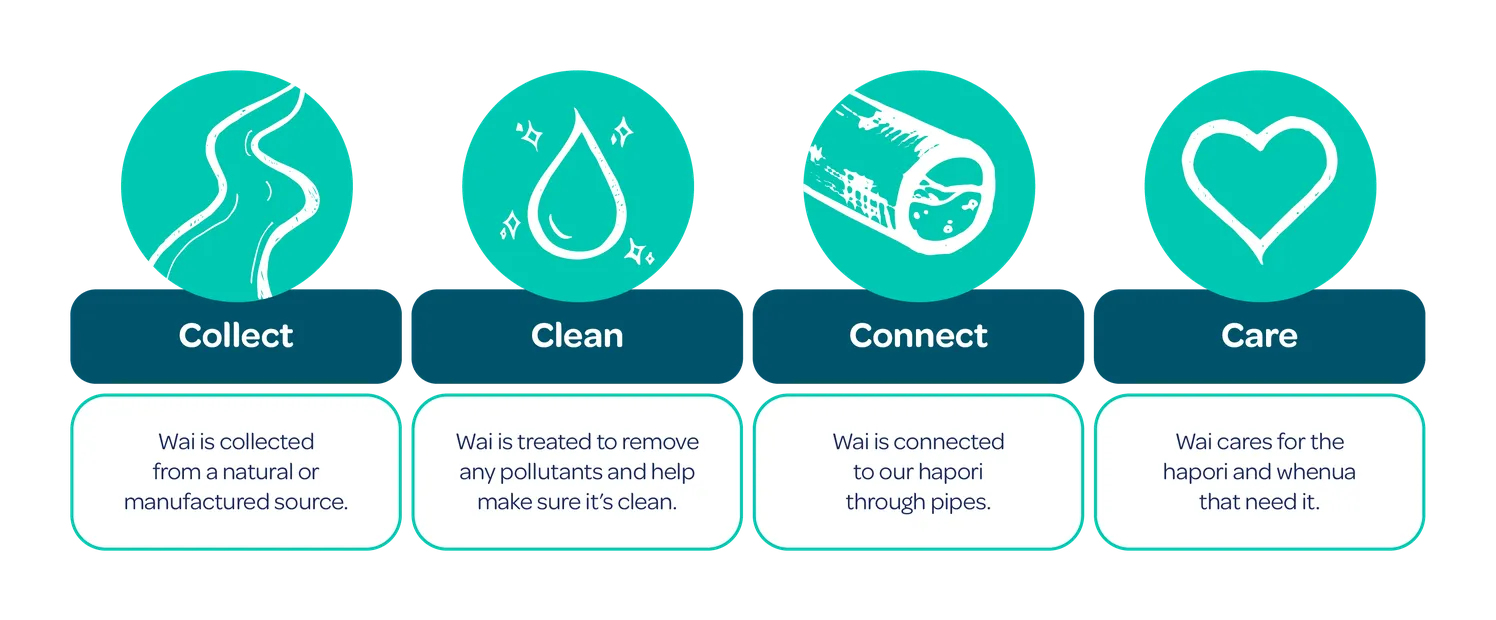
The journey of wai
To support wai to reach our hapori, STEM superstars have created an incredible wai network. Let’s check in with Lupesina to learn more:

Do you remember the four stages of water’s journey through our wai network?
STEM design process | Imagine
Let’s dive even deeper into water’s journey by continuing with step 2 of the STEM design process, imagine.
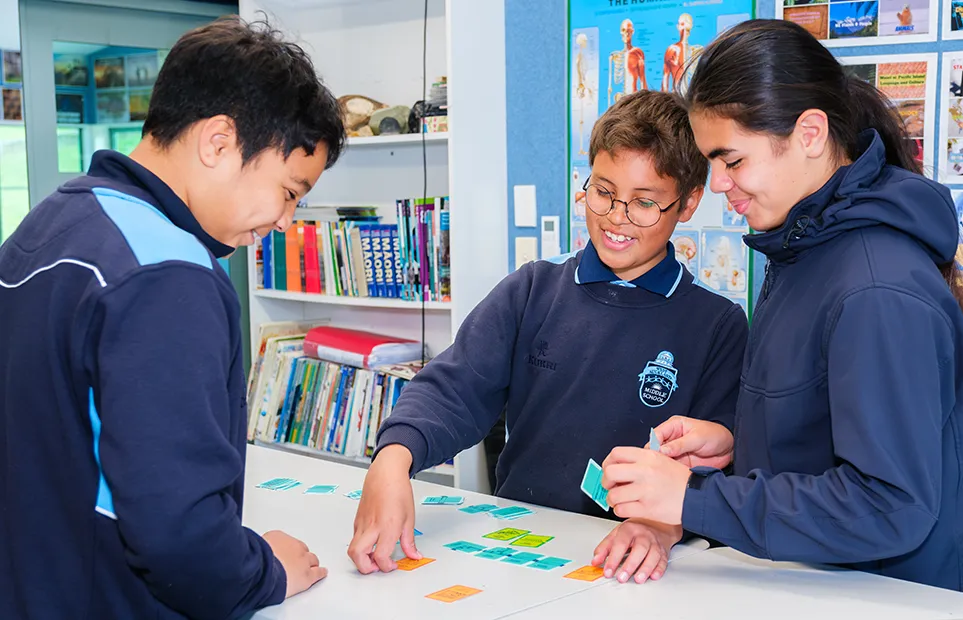
To help you imagine a solution to your challenge problem, you’ll need to build a water network with cards, faster than the other members of your rōpū!
Can you navigate the waters without bursting a pipe? It’s time to play Network Dash!
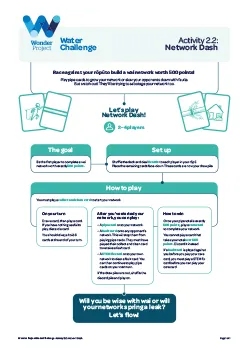
Activity 2.2: Network Dash
Race against your rōpū to build a wai network worth 500 points!
Ngohe 2.2: He whatunga wai
Ka tauwhāinga koutou, ko tō rōpū, ki a koutou anō ki te hanga i tētahi whatunga wai, ā, e 500 piro te whiwhinga!
Collect
Now that you know the four stages of water’s journey, you’re ready to start with stage one, collect.
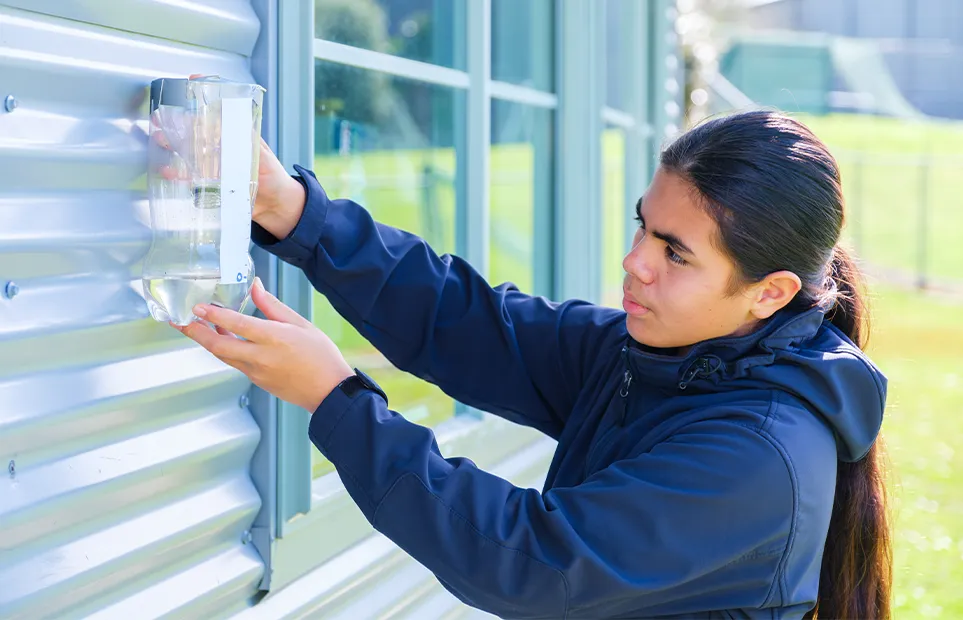
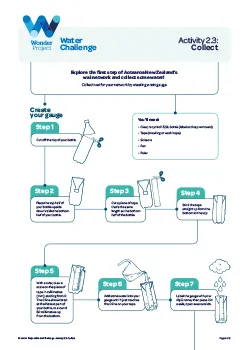
Do some collection of your own and see how much wai Ranginui cries over 4 weeks.
Activity 2.3: Collect
Explore the first step of Aotearoa New Zealand’s wai network and collect some water!
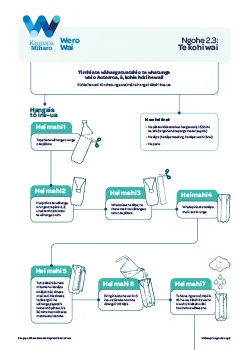
Ngohe 2.3: Te kohi wai
Tirohia te wāhanga tuatahi o te whatunga wai o Aotearoa, ā, kohia hoki he wai!
Reminder!
Start collecting clear glasses to investigate wai paru, and materials to create and test your water treatment plant. You’ll need natural debris (grass, small pieces of bark, leaves, small pebbles), 1 x clear recycled 1.5/2L bottle per rōpū, and a torch (optional).
Tools down!
Mīharo. Today you:
- Learned about Ranginui and Papatūānuku
- Explored the water cycle and Te Hurihanga Wai
- Discovered Aotearoa New Zealand’s wai network
- Continued the STEM design process
- Imagined a wai network by playing Network Dash
- Created a rain gauge to collect wai